The Red Flags Across Cox’s Bazar
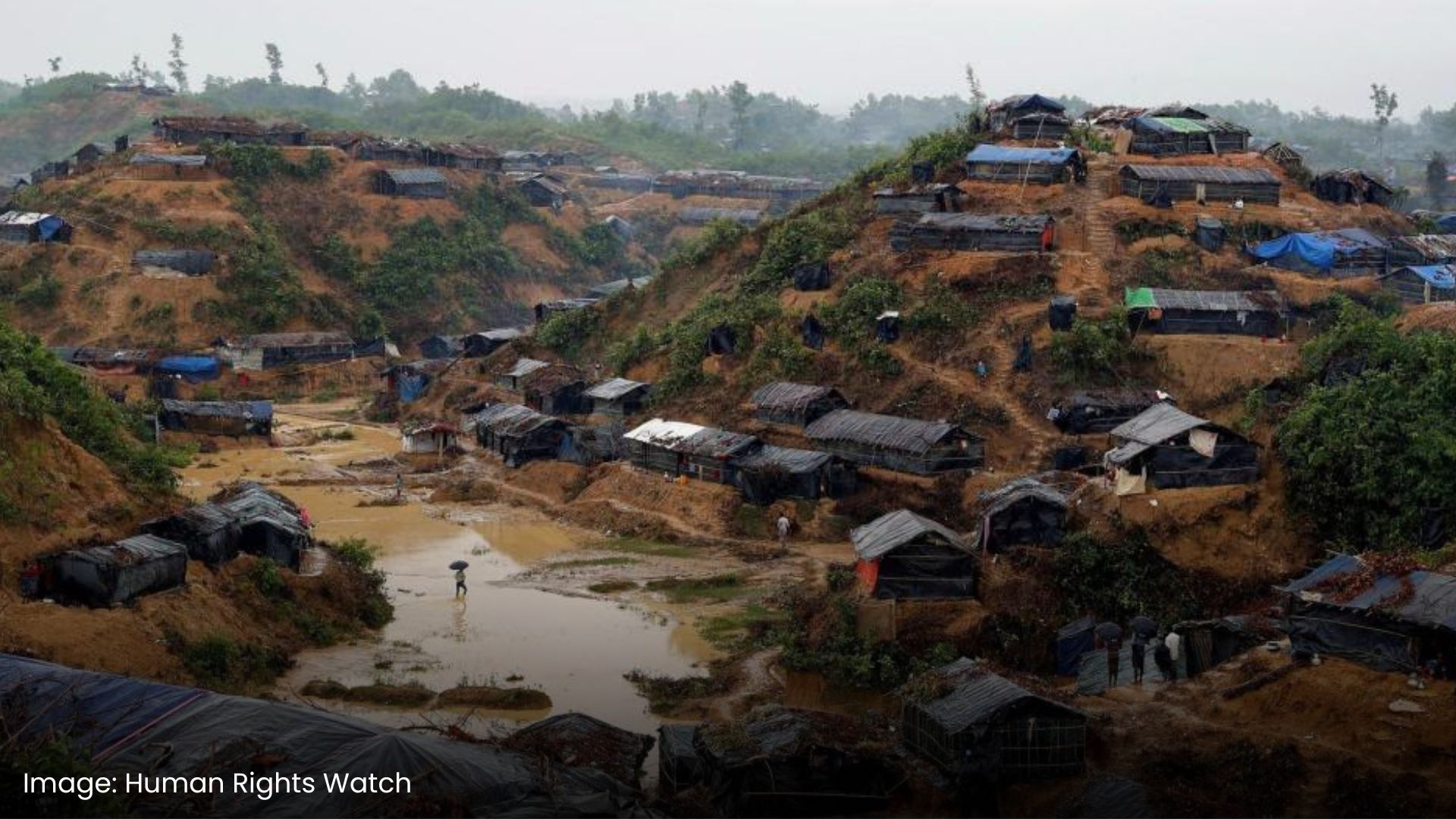
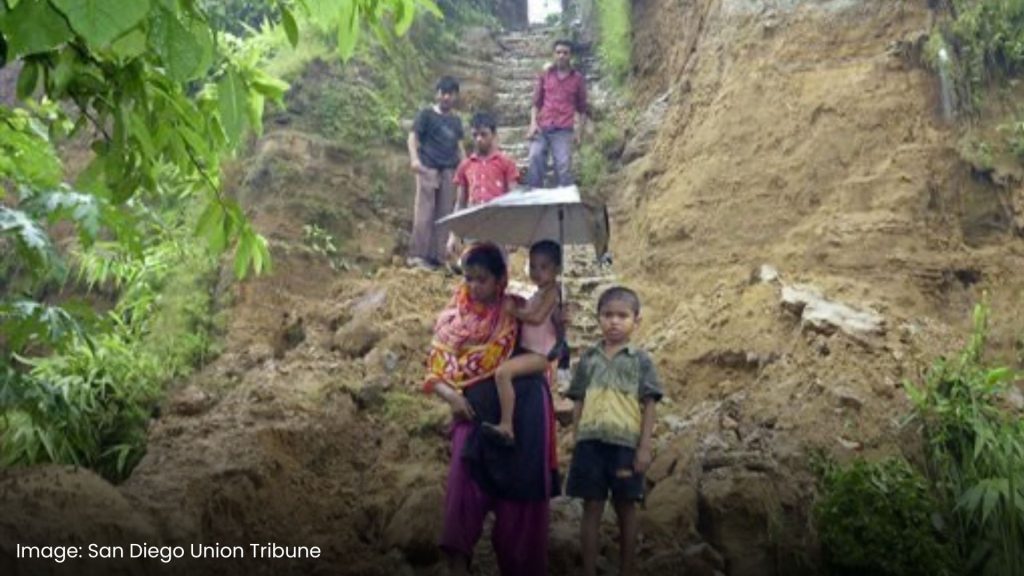
Across the Rohingya camps in Cox’s Bazar, officials hoist red flags on the slopes they believe could give way during the monsoon. The warnings are not theoretical. More than 200 landslides struck the camps between 4 and 19 July 2026, killing at least 15 people, five of them adolescent girls. That is more than twelve landslides a day. Over 13,000 people have been displaced by landslides this year, and more than 3,100 landslide incidents between 2018 and 2025 affected over 73,000 people.
Yet families continue to live directly beneath the flags. One of them is 55 year old Morium Begum, who has lived in the camps since 2017 with five family members. Her shelter sits under a red warning flag. Her situation explains the whole crisis.
Why The Rohingya Camps Keep Cutting Into The Hills
The camps were built for a population that has never stopped growing. Around 150,000 Rohingya have arrived since early 2024, fleeing renewed violence in Myanmar. The 33 camps now hold close to 1.2 million people on roughly 24 square kilometres, against a recorded official capacity of 1,170,978.
When relatives arrive, families extend their shelters the only way available, by cutting into the slope behind them. A camp official in Kutupalong, Rintu Bikash Chakma, says those cuts leave the homes both above and below more vulnerable.
Bangladesh’s Refugee Relief and Repatriation Commissioner, Mohammed Mizanur Rahman, has stated the trap plainly. The community demands expansion, but expansion means destroying more forest and more hills, and Bangladesh says it can no longer afford that.
So the danger feeds itself. More people need shelter. More shelter needs land. More cutting weakens the slopes. And weakened slopes fail when the rain comes.
The Landslide Risk Was Measured Before It Arrived
This is not an unforeseeable natural disaster. It is a measured one. Before the 2017 influx, 109 of 1,726 mapped slope units carried moderate to high landslide susceptibility, and by 2021 that figure had risen to 291. The hills did not change. What was built on them did.
Researchers have gone further and ranked the work needed. 287 slopes require immediate stabilisation, with 428 more classed short term and 505 long term.
The Money For Slope Stabilisation Never Came
As of July 2026, the programme covering access, safety and disaster risk management was only around 40 percent funded, short roughly $23.2 million against the $38.8 million required. Shelter and camp management, which carries slope stabilisation, sat at 42 percent and needed a further $73.9 million.
The wider picture is worse. The 2026 Joint Response Plan asks for $710.5 million to reach 1.6 million people, which is 26 percent below the 2025 appeal and the smallest request in a decade. About half of it has arrived. Food rations have already been cut to $12, $10 or $7 per person a month depending on vulnerability assessment, in camps where children are more than half the population.
The hills are being mapped faster than they are being made safe.
Morium Begum Has Two Options And Neither Is Safe
Morium Begum says the authorities should either make her slope safe or send her family home. Neither is on offer. At a United Nations event on 23 September, High Commissioner Barham Salih said conditions for voluntary, safe, dignified and sustainable return to Myanmar do not currently exist. Conflict continues inside Myanmar, and a genocide case against it remains before the International Court of Justice.
That leaves her precisely where the red flag says nobody should be.
A Generation Born Into The Camps
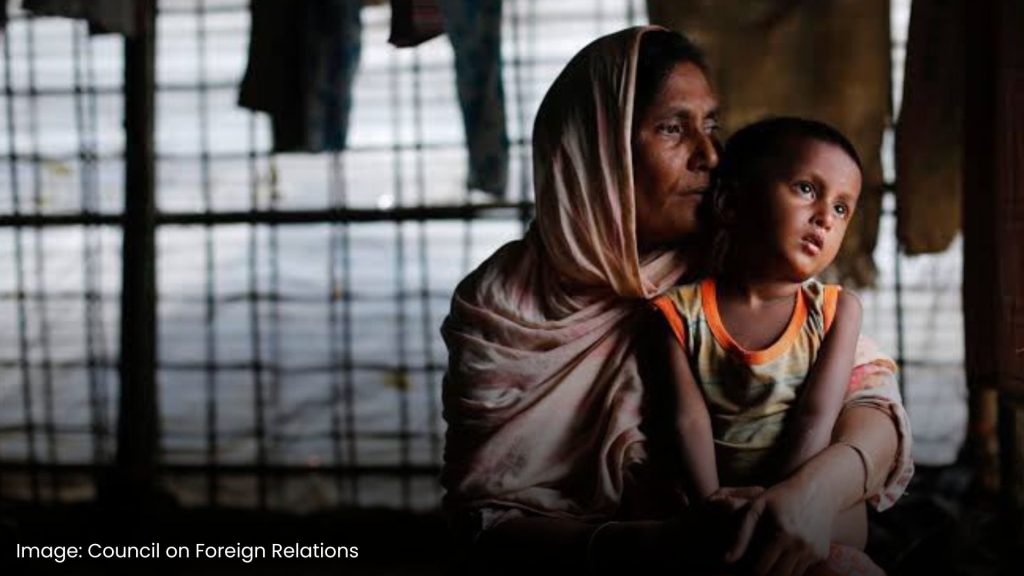
More than 30,000 children are born into the camps every year, according to UN Special Envoy on Myanmar Julie Bishop, who also warned that women and girls face rising risks from armed groups and criminal networks as protection services shrink.
For a child born during the 2017 displacement, the camp is not an interruption to childhood. It is childhood.
Bangladesh says it cannot keep expanding into forest and unstable hills. The UN says return is not possible. And 287 slopes are still waiting for work nobody has funded. The next monsoon will arrive whether or not that work has begun.
By Shizza Umer