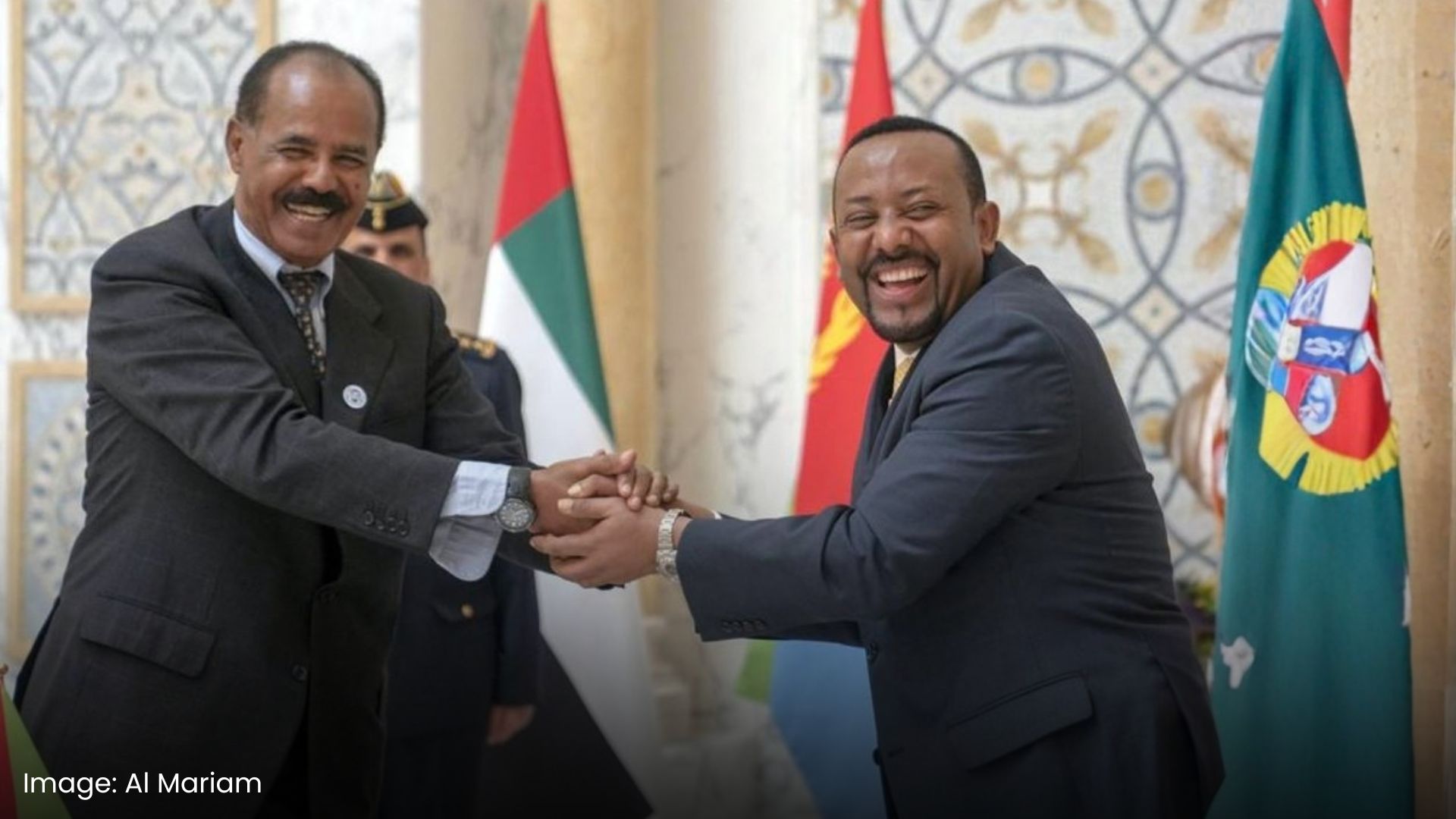
Israeli Prime Minister Benjamin Netanyahu’s visit to Abu Dhabi and his meeting with UAE President Sheikh Mohamed bin Zayed Al Nahyan have drawn attention not simply because the two leaders met, but because of the circumstances surrounding the encounter. Netanyahu travelled to the UAE on Sunday at the invitation of Sheikh Mohamed, while the meeting was only officially confirmed by the Emirati state news agency WAM on Monday. The UAE described the discussion in broad terms, focusing on bilateral relations and regional challenges. Netanyahu’s office similarly said the meeting was intended to strengthen relations between the two countries.


Yet reports from Israeli officials provide a more specific picture. Three senior Israeli officials told Reuters that the meeting lasted approximately six hours and that Iran was a major focus of the discussions. Neither government publicly released a detailed account of the agenda, meaning the exact substance of the conversation remains unclear. The difference between the official description and the more detailed account from Israeli officials is nevertheless significant: Iran appears to have been an important part of a meeting between two states whose relationship has increasingly become connected to the wider security architecture of the Gulf.
The timing is particularly important. The UAE and Israel established diplomatic relations through the US-brokered Abraham Accords in 2020. Since then, their relationship has expanded across diplomatic, economic and security spheres. For the UAE, relations with Israel also provide a direct channel to a country closely connected to Washington. For Israel, ties with the UAE represent engagement with a major Gulf state at a time when regional security is increasingly shaped by tensions involving Iran. Reuters has reported that the UAE strengthened its relationships with Israel and the United States following attacks on the country during the conflict involving Iran.
At the same time, Abu Dhabi’s position cannot be reduced to alignment with Israel. The UAE has repeatedly emphasized diplomacy, regional stability and open channels of communication. Its foreign ministry has stated that UAE engagement since October 7 has been directed toward de-escalation and regional stability, while UAE and Israeli government entities have maintained direct communication. This creates a more complicated regional position: the UAE maintains formal relations with Israel while simultaneously seeking to manage the consequences of conflict involving Iran and other regional actors.


The meeting also comes amid renewed attention to allegations concerning events before the October 7, 2023 Ham*s att*ck. Israeli media have reported that Sheikh Mohamed allegedly warned Netanyahu beforehand that Hamas was preparing a major operation. Netanyahu has denied the allegation, and the UAE has not publicly confirmed it. Reuters reported that the two governments have nevertheless maintained open communication since establishing diplomatic relations in 2020. The allegation therefore forms part of the political context surrounding the meeting, but it should not be treated as an established explanation for why the leaders met.
More broadly, the encounter illustrates how Gulf diplomacy is increasingly shaped by overlapping relationships rather than rigid blocs. The UAE maintains relations with Israel, has historically maintained channels with Iran, and has close security ties with the United States. Those relationships can sometimes pull in different directions, particularly when tensions between Israel, Iran and Washington escalate.
The reported focus on Iran therefore gives Netanyahu’s Abu Dhabi visit significance beyond routine bilateral diplomacy. However, the publicly available information does not establish that the two leaders reached a new security agreement or coordinated any specific policy toward Tehran. What can be established is that the UAE–Israel relationship remains active, that their leaders continue to communicate at the highest level, and that Iran has become an important part of the regional strategic environment in which those relations operate.
The meeting ultimately leaves a larger question open: as the Gulf navigates competing relationships with Israel, Iran and the United States, how will states such as the UAE balance strategic partnerships with the need to prevent further regional escalation?

Reference